
ABOUT THE ARTIST
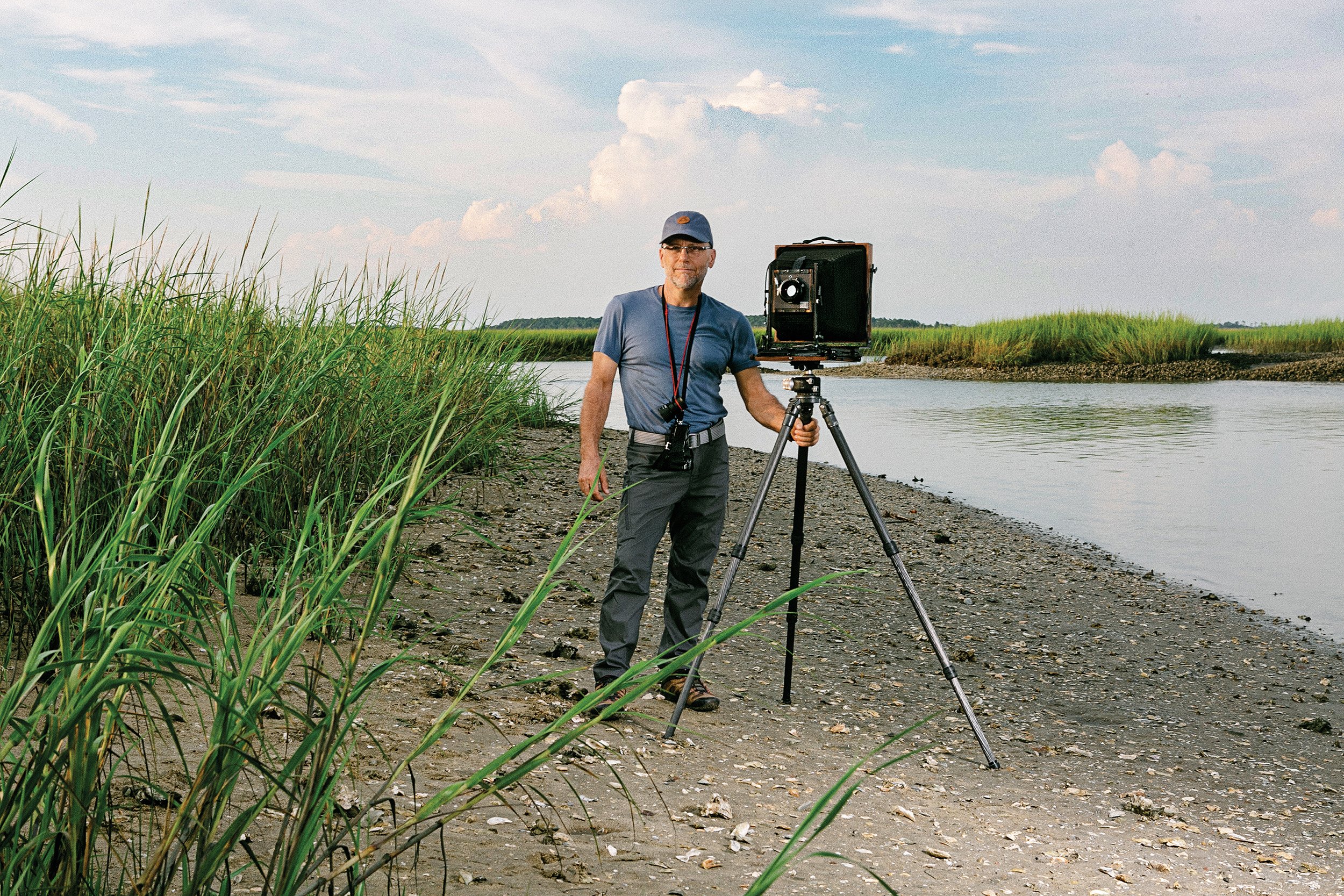
Ben Ham’s photography is shaped by a quiet discipline—images guided by tone, light, and an intuitive sense of composition honed over a lifetime in the traditional craft. Raised in the American South, he spent his formative years immersed in forests, lakes, mountains, and coastlines—experiences that instilled a lasting reverence for the natural world. His photographs are built with the intention of a painter, each image carefully studied before the shutter is released, a process that reflects both patience and precision.
Ben began offering his work to collectors in the mid-2000s and quickly established a national and international following. His photographs are now held in private, corporate, and public collections around the world—from North, Central, and South America to Europe, the United Kingdom, the Middle East, and throughout Asia and Australia. His work has also been featured in notable exhibitions and on national broadcasts, further amplifying his presence among collectors.
Today, Ben continues to work with the same traditional methods and quiet intention that have defined his photography from the beginning, creating images that feel timeless and deeply connected to the landscapes that inspire them.
METHODOLOGY

The Equipment
Ben owns several large format cameras, most are 8 x 10s, a size that refers to the length and width of the negative. A large format camera has movements, tilting or swinging the front, or rear, standard to alter the plane of focus, allowing for the great detail in Ben's images. The camera folds down into a box. He carries his gear in a couple of ways depending on how he is working. Photographing from a boat and the gear goes into several waterproof Pelican cases. When he is hiking, it is in a pack on his back. When flying it goes in a custom-made spinner case that he carries on. He uses a Gitzo carbon fiber tripod with a RRS ball head. The gear weighs around 48 pounds.
His lens kit consists of a 150mmXL Schneider, 240mm Fujinon A, 300mm Nikkor, 400mm Fujinon C. He computes his exposures using the zone system, metering with a Pentax Spot meter.
The Creative Process
"I spend a tremendous amount of my creative time scouting," Ben says. "I often return to a scene at a later time for just the right light or conditions. It can sometimes take many trips to get the mood I am looking for. I approach my subject much like a painter, finding an interesting point of view, then refining it by slight movements to see how spacial relationships line up. I only setup the camera when this is done. I slip under the dark cloth to focus. It requires the use of a loop. There is lots of room for error. It is a slow and contemplative method. The usual time for this is around 20 minutes. I normally expose between two and four sheets of film for each composition. Common exposure times can run a second or two, up to eighteen minutes. This method requires me to work on a single composition per outing. It is the only way to work for me."